Competition mindset, approach and quality
25 May 2026
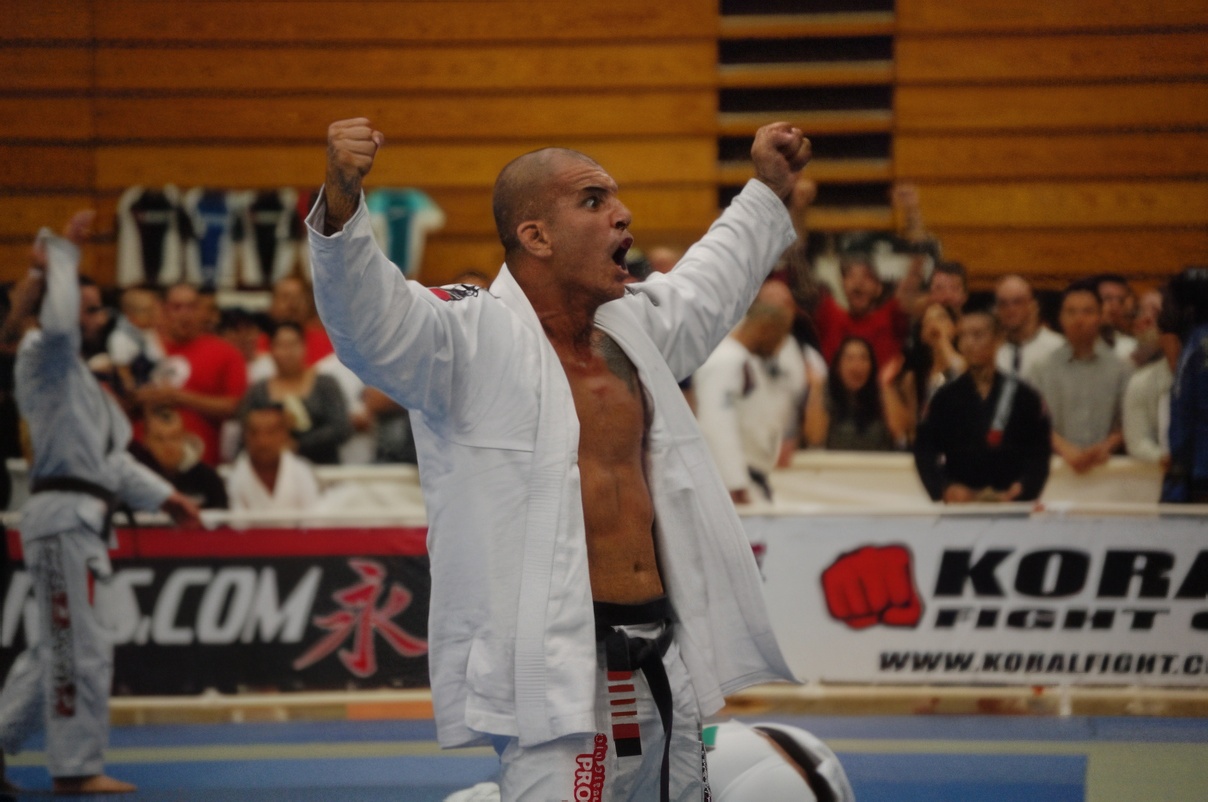
If you're thinking about competing — or you already do — there's a conversation worth having. Not about which tournament to enter or what weight to class jump in to. More about what it actually takes to step on that mat and perform.
Because here's the thing. You are not the only one training.
Assume They're Training Hard
This is the mindset shift that matters most. When you're preparing for a competition, assume your opponent is training twelve hours a week. Assume they're drilling, rolling hard, watching footage, lifting. Assume they're hungry.
Maybe they're not. Maybe you'll show up and they'll be underprepared and you'll win comfortably. Great. But you don't build a competition game on "maybe they're not that good." You build it on "they are dangerous and I need to be ready."
The moment you walk onto the mat expecting an easy match is the moment you get caught. I've seen it. We've all seen it. Someone cruises through warm-ups, rolls half-speed in the final weeks, shows up confident — and gets submitted by someone nobody was watching.
Hard truth: If you're only training 3 hours a week and nothing more, that ain't gonna cut the mustard guys.
Respect the unknown opponent. Prepare accordingly.
Aggression Is a Skill
People misunderstand aggression. They think it means wild, chaotic, go-hard-or-go-home energy. That's not it.
Competitive aggression is controlled pressure. It's the willingness to commit to a takedown, to chase a submission rather than settle for a comfortable position, to impose your game before they impose theirs. It's decisiveness. You see the opening — you go. You don't pause and think about it.
Jiu-Jitsu is a race. Who gets to the position first. Who secures the control first. Who finishes first. Passive athletes lose on points. Passive athletes get their guard passed. They stall in bad positions and get ground down.
Controlled aggression doesn't mean losing your structure. It means keeping your structure and going anyway.
Practice being aggressive in training. Don't just react. Drive the action. Take the shot. Pull the trigger on the submission. You need to be comfortable with that pressure before competition day, not discovering it for the first time under the lights.
This shouldn't be exclusive to Competition Training, but all rounds leading up to your tournament.
Strength and Conditioning Is Not Optional
I'll be honest. If your opponent is training twelve hours a week of BJJ and also lifting and doing conditioning work — and you're just doing BJJ — there's a gap. Maybe technique covers some of that gap. But not all of it.
Strength training builds durability. It means you can fight for grips longer, carry someone's weight in guard, bridge hard when you're in a bad spot. It doesn't replace technique. It supports it. A strong frame is harder to collapse. A strong base is harder to sweep.
Conditioning is the other side. Competition matches are short — but they feel long when you gas out in the second minute. Your technique doesn't disappear when you're tired. It just gets much harder to execute. Your timing goes. Your hip escapes slow down. You make decisions you wouldn't make fresh. Underhooking becomes as difficult as scaling Mt Everest.
You don't need to be a powerlifter. You don't need to run marathons. But you do need to show up in shape and capable of going hard for the full match. That's a baseline.
Technique Still Wins
None of the above replaces technique. That's the foundation everything else sits on.
And here's what I mean by technique in a competition context — it's not just knowing a sweep or a submission. It's knowing why it works, what the opponent has to give you for it to work, and what you do when they don't give you that. Because at competition level, nobody is just handing you the finish. You might get to position A and they shut down option B. So now you need C. And when they defend C, maybe D opens up.
It's never point A to B. It's A to E, back to D, maybe C, maybe something you didn't plan for. That's real jiu-jitsu under pressure.
So drill your techniques. Not just the setups — the contingencies. What if they post? What if they roll? What if they give me the underhook instead? Build the web, not just the single path.
Weight cutting and Gi/No-gi
I don't advise to ever weight cut. It's a dangerous and unpredictable thing that if done incorrectly, may cost you your entire day. Cutting weight, unless you have gotten your body used to it at a young age, is not advisable. You'll most likely have less energy and strength on the day, which is a huge loss for a very small advantage.
Weight cutting in my opinion, isn't worth the marginal gain considering what you'd be sacrificing.
If you only have a couple competitions under your belt, I strongly suggest you pick either Gi or No-gi - not both - to do on the day. Fight day means you bring it. 100% effort. Risk. Go for it and leave everything on the mat.
If you mentally know you have an entire series of fights to deal with later in the day, you will inherently try to preserve your energy and not perform at your peak from the start. Pick one. Stick to it and go hard.
Bring It All Together
The competitor who performs well isn't just the most technical person in the bracket. It's usually the person who is technically sound, physically prepared, mentally aggressive, and has respected their preparation. If you have only one of these qualities and not at least two, it will be very difficult to have success competing.
Train like your opponent is dangerous. Get your conditioning sorted. Lift. Build your game with contingency plans built in. And when you get on that mat — commit. Don't go in hoping for the best. Go in having done the work.
Believe in your training, but you have to supplement with other things. Good conditioning means you can constantly attack, constantly move and put pressure on your opponents.
The Competition Prep plan is legit - use it. It does all the thinking for you, you just need to execute it.
That's the mindset. It's not complicated. It's just hard to sustain week after week.
Which is exactly why most people don't.
Comments
Loading comments…